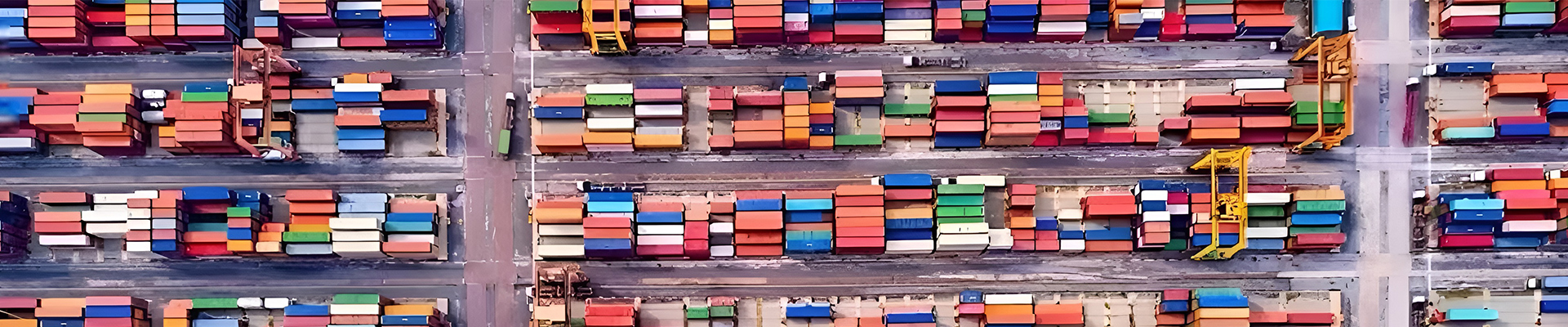
During the 2026 National Day holiday, major ports across China seized the opportunity to accelerate infrastructure development, pushing forward projects focused on smart, specialized, and large-scale port facilities. Key hubs—including those in Shanghai, Qinzhou, and Ningbo-Zhoushan—continued to upgrade their operational infrastructure and management systems. By adhering to high construction standards, these ports are strengthening the foundation for foreign trade logistics and further unleashing their potential as gateways for opening-up. Maintaining a "no-pause during the holidays" approach, ports ensured that major infrastructure projects progressed steadily, driving continuous improvements in intelligence, efficiency, and environmental sustainability.
At the Port of Shanghai—the world’s busiest container port—construction at the Xiaoyangshan North terminal area is in full swing. Five brand-new automated quay cranes have arrived on-site, with the installation and commissioning of core equipment currently underway. As the third automated terminal at the Port of Shanghai, this facility will feature a next-generation smart operation management system—developed in-house by the Shanghai International Port Group (SIPG). Leveraging artificial intelligence, big data, and the Internet of Things (IoT), the terminal will enable fully unmanned and intelligent processes for container loading, unloading, transshipment, and storage. Compared to traditional terminals, this new area is expected to boost operational efficiency by over 30% and significantly reduce labor costs, while enabling stable, 24-hour, round-the-clock operations—further solidifying Shanghai’s status as a global container hub.
Meanwhile, the Port of Qinzhou—a core hub along the southwestern coast—is also accelerating its infrastructure upgrades. Construction is in full progress on five 5,000-ton-class automated berths designed for river-sea intermodal transport. Heavy construction machinery is operating across the site, with foundational work, equipment embedding, and channel dredging all advancing steadily. Tailored for river-sea intermodal logistics, these berths will accommodate a wide variety of inland and coastal vessels. Once completed, they will bridge existing gaps in smart river-sea intermodal capabilities within the Beibu Gulf port cluster, substantially enhancing the efficiency of regional bulk cargo and container transshipment, and contributing to higher quality and greater efficiency in logistics along the New International Land-Sea Trade Corridor.
Beyond these major terminal projects, ports nationwide are simultaneously advancing a range of supporting initiatives, including channel dredging, equipment renewal, eco-friendly retrofitting, and digital transformation. Ningbo-Zhoushan Port has continuously optimized the functions of specialized berths for ore, crude oil, and containers, while upgrading its intelligent scheduling system to achieve end-to-end digital management—covering everything from vessel arrival and cargo handling to logistics transshipment. Meanwhile, coastal ports such as Shenzhen Port and Qingdao Port have accelerated "green" transformations—including the implementation of full-coverage shore power, dust control, and wastewater purification—to refine their low-carbon operational systems, effectively balancing high-efficiency performance with sustainable, eco-friendly development.
The ongoing upgrading of port infrastructure has significantly invigorated foreign trade logistics. Data indicates that in the first three quarters of this year, cargo and container throughput at major ports nationwide continued to grow steadily. Operational efficiency along key shipping routes has seen marked improvement, with the average turnaround time for cross-border logistics reduced by more than 15%. Transport authorities have stated that they will continue to advance the development of modern port clusters by optimizing port layouts, enhancing infrastructure, upgrading intelligent systems, and streamlining intermodal transport networks. The goal is to build modern, efficient, green, smart, and secure port hubs—thereby fostering the stable growth and quality improvement of foreign trade, and supporting high-level opening-up.